
Workers' Memorial Day


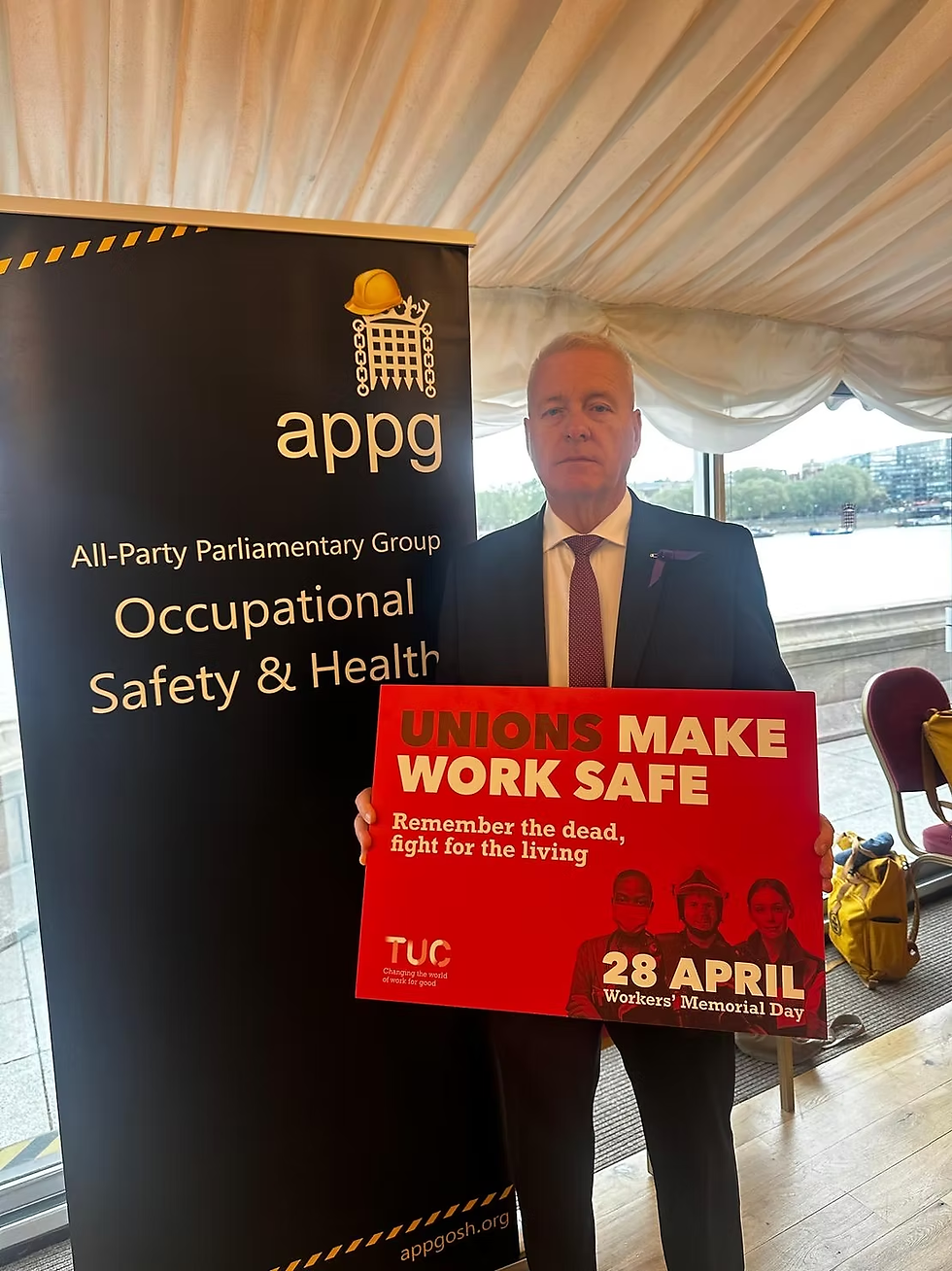
On 28 April 2026, the APPG hosted parliamentarians, trade unionists and bereaved families gathered in the House of Lords to mark Workers’ Memorial Day — an international day of remembrance for those who have lost their lives because of work. Parliamentarians in attendance included: Ian Lavery MP, Warinder Juss MP, Seamus Logan MP, Andy McDonald MP, Neil Duncan-Jordan MP,
Kim Johnson MP, Liz Twist MP, Hamish Falconer MP, Mark Ferguson MP, Anneliese Dodds MP, John Slinger MP, Richard Baker MP, Baroness Theresa Griffin, Baroness Ilora Finlay, Lord Stephen Barry Jones.
Opening the event, Ian Lavery MP, Chair of the APPG, set the scene.
Every year in Britain, around 1.7 million workers suffer from work-related ill health, over half a million are injured at work, and thousands die due to work-related causes. The biggest cause of death remains occupational disease, particularly cancers linked to past exposures such as asbestos. Alongside long-standing dangers, there is now a growing crisis of violence at work, and rising levels of work-related stress and mental ill health. Yet the systems designed to protect workers have not kept pace.
One of the most striking gaps highlighted during the event was that the Health and Safety Executive does not currently investigate work-related suicides. This means that potential workplace causes can go unexamined, and opportunities to prevent future deaths may be missed. At the same time, the Health and Safety Executive has seen its funding cut by almost 50 per cent since 2010, stretching its capacity at a time when the range and complexity of workplace risks are increasing.
As the Chair noted, this raises serious questions about whether the system is adequately equipped to protect workers, particularly when it comes to emerging risks like psychosocial harm.
Stories that demand change

The most powerful moments of the event came from those who shared personal testimony.
Professor Julia Waters spoke movingly about her sister Ruth Perry, a dedicated and widely respected headteacher who took her own life following an Ofsted inspection.
Julia’s testimony highlighted the devastating impact that workplace pressure can have, and the urgent need to recognise work-related suicide as a serious occupational safety issue. As she made clear, until such deaths are properly recognised and investigated, the risk of future tragedies remains.

Barry Appleton then spoke about hiscolleague Jorge Ortega, known affectionately as “George”, a transport worker and RMT union member who was killed in a violent attack at work. His account was a stark reminder of the reality facing many public-facing workers, and the very real risks posed by workplace violence.

Anne Davies shared the story of her husband Jeff, a firefighter and member of the FBU, who died from cancer caused by exposure to toxic substances during his work. Anne's testimony underlined the long-term consequences of occupational exposure, and the importance of prevention, even when the risks may not be immediately visible.

Finally, Kate Bell, Assistant General Secretary of the Trades Union Congress, reflected on the wider context and the role of trade unions in improving workplace safety. She emphasised that union health and safety representatives play a vital role in identifying risks, holding employers to account, and ensuring that workers’ voices are heard.
A call for action
Across all contributions, a clear message emerged: work-related harm is preventable, but only if the right systems are in place.
That means:
Properly resourcing regulators like the Health and Safety Executive
Ensuring that all forms of work-related harm, including suicide, are recognised and investigated
Tackling the rise in workplace violence
And strengthening the role of workers and their representatives in keeping workplaces safe
Workers’ Memorial Day is marked each year under the slogan: “Remember the dead, fight for the living.” This event brought that message into sharp focus.
The event concluded with a minute’s silence, giving those in attendance a chance to reflect on the lives lost, and the work still to be done.


Comments